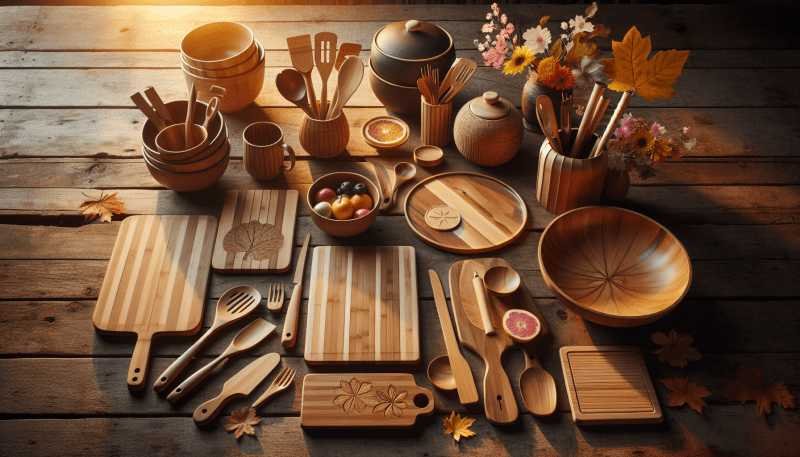
Introduction Bamboo has emerged as a popular material for kitchenware and tableware, moving beyond its traditional uses into modern homes, restaurants, and product lines worldwide. As consumers and manufacturers seek materials that balance performance, sustainability, aesthetics, and cost, bamboo stands out as a compelling choice. This article examines the advantages of bamboo kitchen and dining products from environmental, practical, health, economic, and aesthetic perspectives, and addresses common concerns and best practices for use and care.
- Environmental Benefits
- Rapid renewability: Bamboo is one of the fastest-growing plants on earth. Certain species can grow several feet per day and reach maturity in three to five years, compared with decades for most hardwoods. This rapid growth rate reduces pressure on slow-growing timber resources.
- Low input cultivation: Bamboo typically requires less fertilizer and fewer pesticides than many conventional crops. It can thrive in diverse climates and, in many cases, be grown without intensive chemical inputs.
- Soil and ecosystem benefits: Bamboo’s extensive root systems help prevent soil erosion, improve water retention, and can rehabilitate degraded land. Plantations can act as carbon sinks—sequestering carbon dioxide as the culms grow—contributing to climate change mitigation when managed responsibly.
- Reduced deforestation: Substituting bamboo for hardwoods in kitchenware and tableware reduces demand for timber and can help conserve old-growth forests and their biodiversity.
- Lower life-cycle impacts (potentially): When sustainably produced and processed with minimal chemical treatment, bamboo products can have a smaller environmental footprint compared with plastic or metal alternatives—especially when considering end-of-life scenarios like composting or low-energy disposal.
- Functional and Performance Advantages
- Strength and durability: Bamboo has an excellent strength-to-weight ratio. Properly manufactured bamboo kitchen tools and dishes can be very durable—resistant to cracking or warping when used and cared for appropriately.
- Lightweight: Compared with ceramic, cast iron, or many metals, bamboo tableware is lightweight, making it easier to handle, transport, and store—an asset in busy kitchens, food-service environments, or for outdoor dining.
- Heat resistance: Bamboo does not transfer heat as readily as metal. Bamboo utensil handles, serving boards, and some dishware can be more comfortable to handle around hot foods and cookware.
- Low thermal conductivity: Because it is a poor conductor of heat, bamboo utensils and serving pieces are less likely to become uncomfortably hot when resting against warm dishes.
- Natural antibacterial properties: Some studies indicate bamboo contains natural antimicrobial compounds (such as bamboo kun) that can inhibit bacterial growth. While these properties are not a substitute for good hygiene and cleaning practices, they may contribute to a reduced risk of bacterial proliferation on bamboo surfaces compared with certain other materials.
- Gentle on cookware: Bamboo utensils are less likely to scratch nonstick and other coated surfaces than metal utensils, extending the life of expensive pans.
- Versatility: Bamboo can be engineered into a wide variety of kitchen items—cutting boards, serving bowls, spoons, spatulas, chopsticks, plates, steamers, trays, kitchen organizers—and can be laminated or molded into composite materials to meet diverse functional requirements.
- Health and Safety Considerations
- Chemical safety (when properly made): High-quality bamboo kitchenware that is processed without harmful adhesives or finishes (or uses food-safe adhesives and coatings) can be a safe alternative to plastics that may leach chemicals into food. Look for products certified food-safe and free from BPA, phthalates, and toxic finishes.
- Low allergenicity: Bamboo is not a common food allergen. Individuals with wood allergies should exercise caution, but for most people bamboo tableware presents a low risk of allergic reaction.
- Thermal comfort and handling safety: As noted earlier, bamboo’s low thermal conductivity and comfortable tactile properties reduce the risk of burns or slips compared with metal utensils when handling hot food.
- Aesthetic and Sensory Appeal
- Warm, natural look: Bamboo’s grain and warm tones lend a natural, elegant appearance that complements many table settings and kitchen decors—from rustic to contemporary designs.
- Customizable finishes: Bamboo accepts a range of finishes—from natural oiling to food-safe lacquers—and can be laser-engraved or dyed for branding, personalization, or decorative purposes.
- Tactile experience: Bamboo items often feel warm and pleasant to the touch, enhancing the dining experience by offering a contrast to cold ceramics or plastics.
- Economic and Market Advantages
- Cost-effective: Because of its rapid growth and high yield per hectare, bamboo can be an economically attractive raw material. Costs for bamboo products can be competitive with other natural materials, especially when produced at scale.
- Growing consumer demand: Eco-friendly and sustainable product lines are increasingly popular. Bamboo kitchenware fits into market trends favoring natural materials, minimalism, and environmentally responsible choices.
- Job creation and rural development: Bamboo cultivation and processing can support local economies in regions where bamboo is indigenous, providing employment opportunities from harvesting to manufacturing and design.
- Manufacturing Flexibility and Innovation
- Engineered bamboo composites: Modern manufacturing techniques allow bamboo fibers and veneers to be laminated with natural or food-safe adhesives to create strong, uniform sheets and molded shapes. These engineered materials improve dimensional stability and expand design possibilities.
- Compatibility with modern manufacturing: Bamboo can be CNC-machined, laser-cut, steam-bent, and shaped using contemporary production methods, enabling high-precision and consistent product lines.
- Biodegradability and compostability: Pure bamboo products or those bonded with biodegradable adhesives may be compostable at end of life, unlike many plastics. This supports circular economy principles when managed properly.
- Limitations and Responsible Use
- Quality variation: Not all bamboo products are equal. Quality depends on species, harvesting practices, processing methods, and adhesives/finishes used. Low-quality products may delaminate, harbor bacteria if poorly finished, or contain harmful resins.
- Sensitivity to prolonged moisture and heat: Bamboo is more water-sensitive than some synthetic materials. Extended soaking, dishwasher use, or prolonged exposure to high heat may cause warping, cracking, or delamination. Manufacturers’ care instructions should be followed—hand washing and occasional oiling are commonly recommended.
- Sourcing and certifications: Sustainable benefits depend on responsible sourcing. Unsustainable plantation practices, monoculture, or conversion of native ecosystems to bamboo plantations can negate environmental advantages. Look for credible certifications (e.g., FSC, other regional sustainability standards) and transparent supply chains.
- Adhesives and finishes: Some bamboo composites use urea-formaldehyde or other resins that can raise health concerns. Choose products using food-safe adhesives and finishes certified for kitchen use.
- Not universally suitable: For some uses—extreme heat exposure, high-acid applications, or where complete sterilization in high-temperature dishwashers is required—other materials (stainless steel, certain ceramics) may be preferable.
- Best Practices for Consumers and Manufacturers
- For consumers:
- Choose reputable brands that provide material, adhesive, and finish information.
- Follow care instructions: hand-wash, dry promptly, avoid prolonged soaking and direct prolonged heat.
- Recondition wooden/bamboo surfaces with food-safe mineral or plant oils as recommended to maintain moisture balance and appearance.
- Avoid cutting high-acid foods for long periods on unsealed bamboo surfaces; use appropriate cutting boards and replace when deeply scored.
- For manufacturers:
- Use food-safe, low-VOC adhesives and finishes; disclose materials and processing methods.
- Implement sustainable sourcing policies, maintain biodiversity-friendly cultivation practices, and obtain credible third-party certifications where possible.
- Invest in product testing (durability, microbial growth, heat resistance) and clear consumer care guidance.
Conclusion Bamboo offers a strong combination of environmental, functional, aesthetic, and economic advantages that make it an attractive material for kitchenware and tableware. Its rapid renewability, favorable mechanical properties, pleasing appearance, and potential for low-impact life cycles position bamboo as a sustainable alternative to traditional timber, plastics, and some metals—provided products are responsibly sourced and properly manufactured. With attention to quality, appropriate care, and transparent supply chains, bamboo kitchen and dining products can deliver durable, safe, and stylish solutions for modern culinary life.